AI for Grocery Stores: Fewer Empty Shelves, Less in the Dumpster
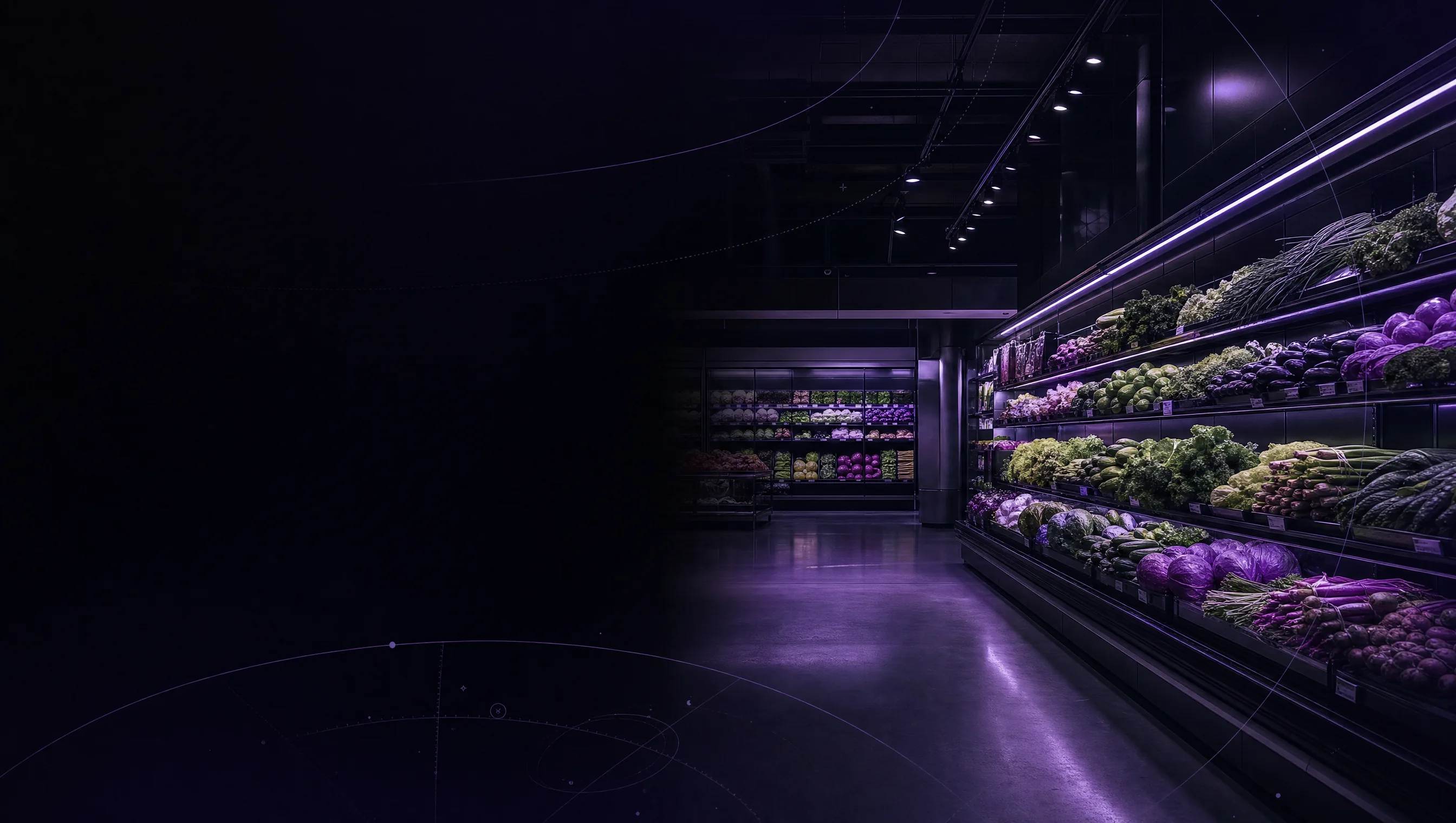
Sagan Labs AI builds AI for grocery stores that attacks the margin-killer no other retail vertical has as badly: spoilage. Perishable-aware demand forecasting, automated replenishment, and computer-vision shelf monitoring that keep produce fresh and shelves full. We build on the inventory and supply-chain logic proven in CargoFusion, spec-first and QA-gated, grounded in your real product mix and sales data.
The Grocery Margin Squeeze
Perishables, complex assortments, and thin margins make grocery uniquely hard on inventory.
AI Built for Fresh, Fast-Moving Grocery
Perishable Demand Forecasting: Forecasting tuned for produce, dairy, and meat to minimize spoilage — the inventory logic proven in CargoFusion.
Automated Replenishment: Intelligent reordering that keeps availability high without overstock, via our AI Agent Development.
Shelf-Monitoring Vision: Computer vision that flags out-of-stocks, misplaced items, and planogram gaps, built with our AI-Powered Automation.
Personalized Promotions & Customer Chat: Targeted offers by shopping history plus a customer-facing agent, built on the conversational-AI tech behind FirstContactX.
Fresher Shelves, Better Numbers
Meaningfully less spoilage and food waste
Higher inventory accuracy, fewer stockouts
Bigger baskets and stronger loyalty
More efficient labor and operations
Merchandising driven by real data
Frequently Asked Questions About AI in Grocery Stores
AI reduces food waste through precise demand forecasting for perishables, dynamic markdowns on items approaching expiration, optimized ordering quantities, temperature monitoring to prevent spoilage, and inventory rotation recommendations. Grocers using AI typically reduce waste by 20-40% while maintaining product availability.
AI shelf monitoring uses computer vision cameras or robots to scan shelves, detecting out-of-stocks, misplaced items, pricing errors, and planogram compliance issues. This enables rapid restocking (reducing lost sales), better shelf presentation, and data for assortment optimization.
AI personalizes grocery shopping through customized promotions based on purchase history, personalized digital circulars, shopping list suggestions, recipe recommendations with ingredient additions, and tailored health-conscious alternatives. This drives basket size and customer loyalty.
AI optimizes staffing by forecasting customer traffic patterns, predicting checkout demand, scheduling based on tasks (stocking, deli, bakery), and adjusting for promotions and events. This ensures adequate coverage during peak times while minimizing labor costs during slower periods.
AI enhances fulfillment through optimal pick paths (reducing picking time), substitution recommendations (when items unavailable), delivery route optimization, dynamic time slot management, and demand prediction for staging preparation. This improves order accuracy and delivery efficiency.
AI forecasts demand for perishables at the SKU and store level, tuned to shelf life, so you order closer to what you'll actually sell — and automated replenishment keeps it tight. Sagan Labs AI builds this on the inventory and supply-chain logic proven in CargoFusion, grounded in your real sales data.
As a typical range: a focused forecasting or shelf-monitoring system usually lands in $15k–$40k, while a broader build spanning forecasting, replenishment, and vision typically runs $40k–$90k+. These are typical scoping ranges, not quotes — confirmed after discovery, and scalable across locations.
Yes — spoilage and stockouts hit independents proportionally harder, and this is a low-competition space where moving early pays off. We scope one high-ROI use case (usually perishable forecasting), prove the savings, then expand, so it fits an independent's budget and risk tolerance.
Start Where the Waste Is
Spoilage, stockouts, or promotions — tell us your biggest grocery leak. We'll scope AI for your store, grounded in your real product and sales data, built to ship.
Optimize My Grocery Store